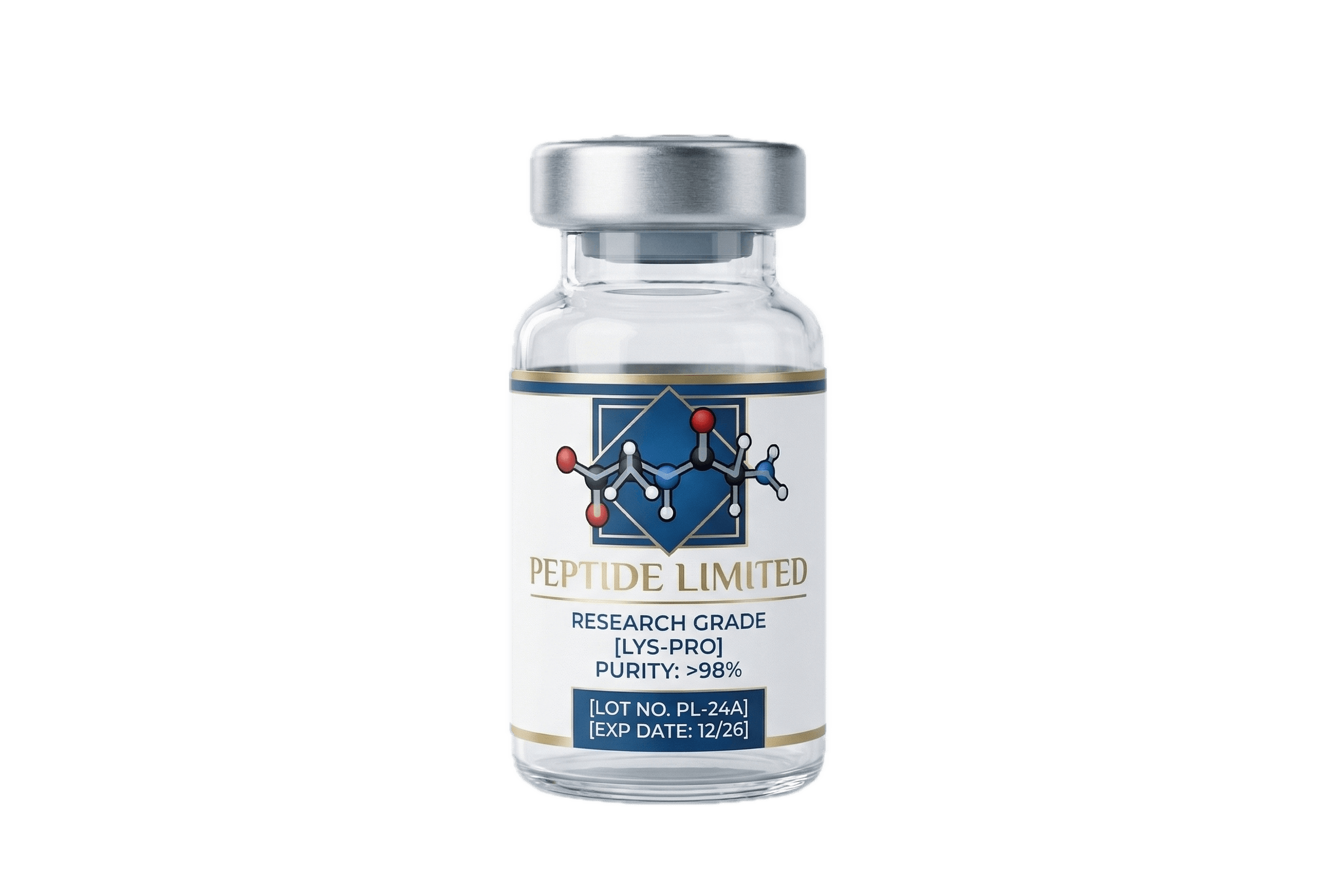
Cerebrolysin (60mg)
Especificaciones técnicas
| Pureza (HPLC) | Pharmaceutical-grade standardized hydrolysate |
| Número CAS | 12656-61-0 |
| Forma | White lyophilized powder |
| Almacenamiento | -20°C |
| Secuencia | Mixture of low-molecular-weight neuropeptides and free amino acids (<10 kDa fraction) |
| Forma salina | Acetate |
| Solubilidad | Aqueous formulation, pH ~5.5-6.5 |
Cerebrolysin (60mg)
Precio de lista en EUR · HU, SK, CZ, PL
- Eurozone (EUR)40,50 EUR
- Hungría (HU)40,50 EUR≈ 16 200 Ft
- Eslovaquia (SK)40,50 EUR
- Chequia (CZ)40,50 EUR≈ 1 013 Kč
- Polonia (PL)40,50 EUR≈ 172,13 zł
Mismo precio de lista en EUR para envío a Hungría, Eslovaquia, República Checa y Polonia. El pago se cobra en EUR.
HUF/CZK/PLN indicativos convertidos desde EUR; Eslovaquia usa EUR. Tasas aproximadas. Cobro en EUR.
Neurotrophic peptide complex for cognitive and neuroprotection research. 60mg vial.
Estrictamente para investigación de laboratorio.
No apto para consumo humano, uso veterinario ni diagnóstico.
From the Peptide Explorer
A parenteral neuropeptide preparation produced by controlled enzymatic breakdown of purified porcine brain proteins. Contains active low-molecular-weight neuropeptides and free amino acids that mimic the action of endogenous neurotrophic factors, with demonstrated neuroprotective and neurotrophic activity across stroke, TBI, and dementia models.
Key Mechanisms
- ›Neurotrophic factor-like activity (BDNF, GDNF, NGF mimetic)
- ›Reduction of excitotoxicity and free-radical damage
- ›Inhibition of calpain-mediated apoptosis
- ›Enhanced neurogenesis in dentate gyrus
- ›Modulation of microglial inflammation
Primary Research Areas
- ›Ischemic stroke recovery
- ›Traumatic brain injury
- ›Vascular dementia
- ›Alzheimer's disease research
- ›Neurodevelopmental models
Key Research Findings
- CASTA trial: significant functional improvement after acute ischemic stroke (Heiss et al., 2012)
- Dose-dependent cognitive improvement in mild-to-moderate Alzheimer's (Álvarez et al., Neurobiol Aging 2006)
- Reduced infarct volume and apoptosis in rodent MCAO models
Research Overview
A parenteral neuropeptide preparation produced by controlled enzymatic breakdown of purified porcine brain proteins. Contains active low-molecular-weight neuropeptides and free amino acids that mimic the action of endogenous neurotrophic factors, with demonstrated neuroprotective and neurotrophic activity across stroke, TBI, and dementia models.
Origin: Enzymatically standardized hydrolysate of purified porcine brain proteins; clinically used in Europe and Asia
Mechanism of Action
- Neurotrophic factor-like activity (BDNF, GDNF, NGF mimetic)
- Reduction of excitotoxicity and free-radical damage
- Inhibition of calpain-mediated apoptosis
- Enhanced neurogenesis in dentate gyrus
- Modulation of microglial inflammation
Primary Research Areas
- Ischemic stroke recovery
- Traumatic brain injury
- Vascular dementia
- Alzheimer's disease research
- Neurodevelopmental models
Key Published Findings
- CASTA trial: significant functional improvement after acute ischemic stroke (Heiss et al., 2012)
- Dose-dependent cognitive improvement in mild-to-moderate Alzheimer's (Álvarez et al., Neurobiol Aging 2006)
- Reduced infarct volume and apoptosis in rodent MCAO models
Research Protocol
Commonly studied routes: Intravenous, Subcutaneous. Reconstitute with bacteriostatic water. Consult published literature for dose ranges; use our Peptide Calculator for volumetric preparation.
Storage
Store below 25°C. Protect from light. Do not freeze
Important Notice
Cerebrolysin (60mg) is supplied for laboratory research use only (RUO). Not for human or veterinary use, diagnostics, or therapeutics.
Especificaciones de investigación
Synthesized for strict analytical consistency. Verified via HPLC/MS.Ver estándares de calidad →
Manipulación y almacenamiento
- Store lyophilized at -20°C
- Protect from light and moisture
- Use sterile bacteriostatic water for reconstitution
- Minimize freeze-thaw cycles
- Solubility: Aqueous formulation, pH ~5.5-6.5