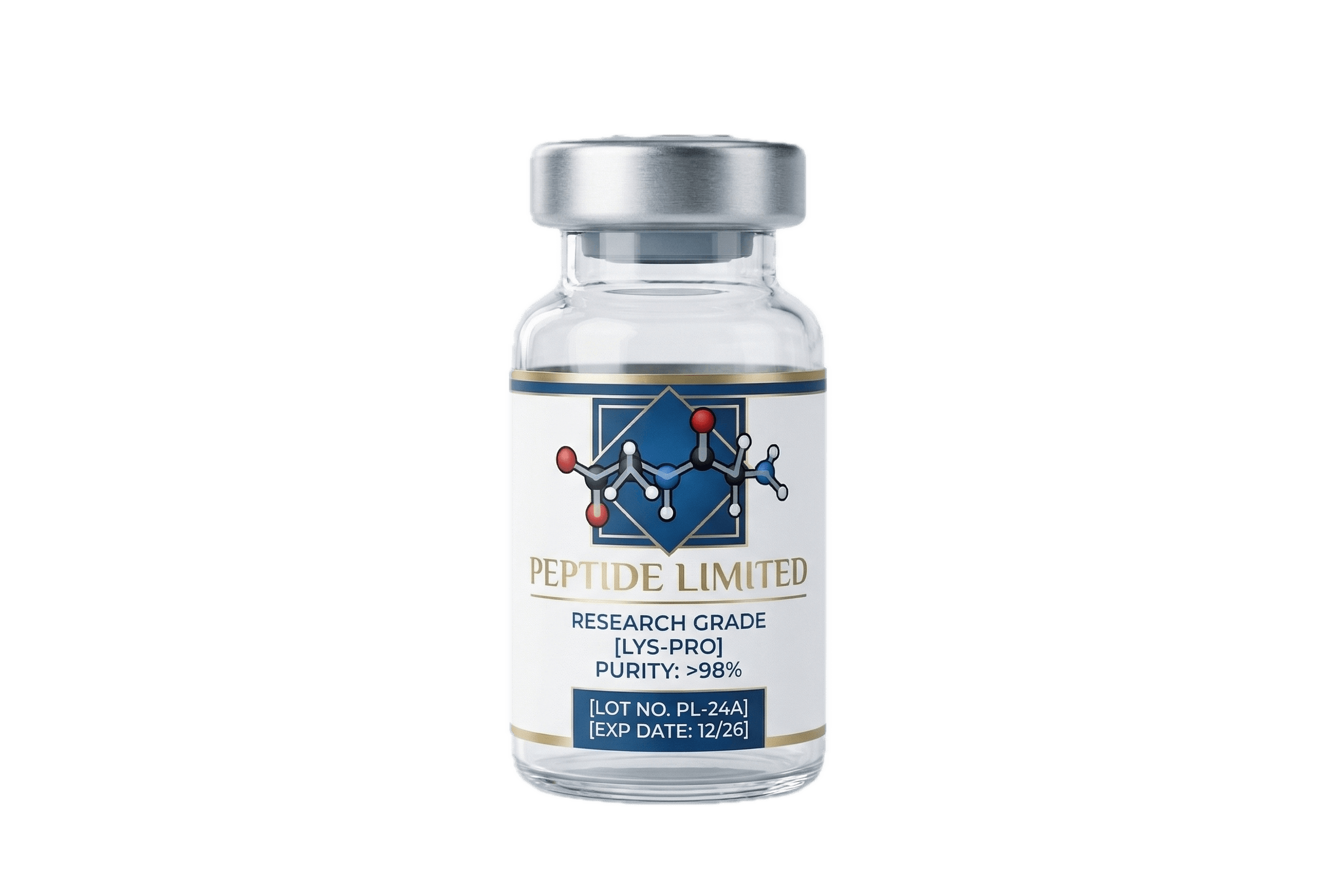
Oxytocin Acetate Nasal Spray (10mg)
Specyfikacja techniczna
| Czystość (HPLC) | ≥98% (HPLC) |
| Numer CAS | 50-56-6 |
| Forma | White lyophilized powder |
| Przechowywanie | -20°C |
| Sekwencja | Cys-Tyr-Ile-Gln-Asn-Cys-Pro-Leu-Gly-NH₂ (disulfide Cys1-Cys6) |
| Masa cząsteczkowa | 1,007.19 g/mol |
| Forma soli | Acetate |
| Rozpuszczalność | Soluble in water |
Oxytocin Acetate Nasal Spray (10mg)
Cena katalogowa w EUR · HU, SK, CZ, PL
- Eurozone (EUR)182,70 EUR
- Węgry (HU)182,70 EUR≈ 73 080 Ft
- Słowacja (SK)182,70 EUR
- Czechy (CZ)182,70 EUR≈ 4 568 Kč
- Polska (PL)182,70 EUR≈ 776,47 zł
Ta sama cena katalogowa w EUR przy dostawie na Węgry, Słowację, Czechy i Polskę. Płatność w EUR.
Orientacyjne kwoty HUF, CZK i PLN przeliczone z EUR; Słowacja stosuje EUR. Kursy przybliżone. Płatność w EUR.
Oksytocyna (octan) — aerozol do nosa 10 mg — forma donosowa oksytocyny dla badań nad zachowaniami społecznymi, więzią i stresem. Wyłącznie RUO — do badań laboratoryjnych; nie do spożycia przez ludzi.
Wyłącznie do badań laboratoryjnych.
Nie do spożycia przez ludzi, zastosowań weterynaryjnych ani diagnostycznych.
From the Peptide Explorer
A cyclic nonapeptide synthesized by magnocellular neurons of the hypothalamus and released from the posterior pituitary. It acts through the oxytocin receptor (OXTR, a Gq-coupled GPCR) at both peripheral sites (uterus, mammary gland) and central sites (amygdala, nucleus accumbens, PVN), mediating parturition, lactation, pair-bonding, and social cognition.
Key Mechanisms
- ›OXTR G-protein-coupled receptor agonism
- ›Central modulation of amygdalar fear circuits
- ›Regulation of HPA axis and cortisol response
- ›Peripheral uterine and mammary myoepithelial contraction
- ›Cross-talk with vasopressin V1a receptor
Primary Research Areas
- ›Social cognition and autism-spectrum models
- ›Pair-bonding and attachment
- ›Anxiety and stress research
- ›Parturition and lactation physiology
- ›Wound healing
Key Research Findings
- Increased trust behaviour in human investment-game paradigms (Kosfeld et al., Nature 2005)
- Improved emotion-recognition in autism-spectrum research cohorts (Guastella et al., 2010)
- Central role in pair-bonding in prairie vole comparative neuroscience
Research Overview
A cyclic nonapeptide synthesized by magnocellular neurons of the hypothalamus and released from the posterior pituitary. It acts through the oxytocin receptor (OXTR, a Gq-coupled GPCR) at both peripheral sites (uterus, mammary gland) and central sites (amygdala, nucleus accumbens, PVN), mediating parturition, lactation, pair-bonding, and social cognition.
Origin: Nonapeptide hormone synthesized in the paraventricular and supraoptic hypothalamic nuclei; released from the posterior pituitary
Mechanism of Action
- OXTR G-protein-coupled receptor agonism
- Central modulation of amygdalar fear circuits
- Regulation of HPA axis and cortisol response
- Peripheral uterine and mammary myoepithelial contraction
- Cross-talk with vasopressin V1a receptor
Primary Research Areas
- Social cognition and autism-spectrum models
- Pair-bonding and attachment
- Anxiety and stress research
- Parturition and lactation physiology
- Wound healing
Key Published Findings
- Increased trust behaviour in human investment-game paradigms (Kosfeld et al., Nature 2005)
- Improved emotion-recognition in autism-spectrum research cohorts (Guastella et al., 2010)
- Central role in pair-bonding in prairie vole comparative neuroscience
Research Protocol
Commonly studied routes: Intranasal, Intravenous, Subcutaneous. Reconstitute with bacteriostatic water. Consult published literature for dose ranges; use our Peptide Calculator for volumetric preparation.
Storage
2-8°C liquid or nasal spray; -20°C lyophilized
Important Notice
Oxytocin Acetate Nasal Spray (10mg) is supplied for laboratory research use only (RUO). Not for human or veterinary use, diagnostics, or therapeutics.
Specyfikacja badawcza
Synthesized for strict analytical consistency. Verified via HPLC/MS.Zobacz standardy jakości →
Przechowywanie i obsługa
- Store lyophilized at -20°C
- Protect from light and moisture
- Use sterile bacteriostatic water for reconstitution
- Minimize freeze-thaw cycles
- Solubility: Soluble in water