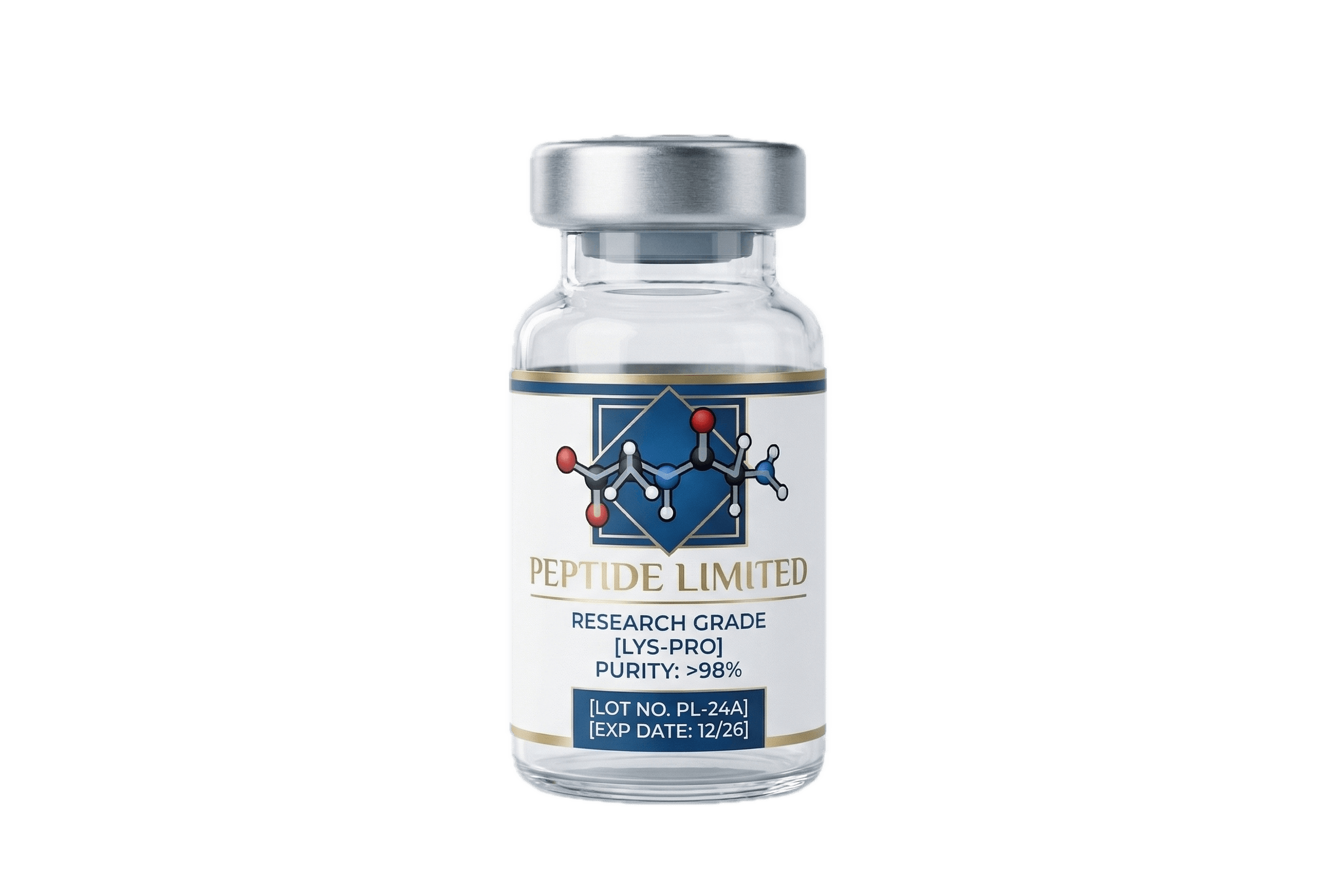
BPC-157 (10mg)
Specyfikacja techniczna
| Czystość (HPLC) | ≥99% (HPLC) |
| Numer CAS | 137525-51-0 |
| Forma | White lyophilized powder |
| Przechowywanie | -20°C |
| Sekwencja | Gly-Glu-Pro-Pro-Pro-Gly-Lys-Pro-Ala-Asp-Asp-Ala-Gly-Leu-Val |
| Masa cząsteczkowa | 1,419.53 g/mol |
| Forma soli | Acetate |
| Rozpuszczalność | Soluble in water, DMSO |
BPC-157 (10mg)
Cena katalogowa w EUR · HU, SK, CZ, PL
- Eurozone (EUR)96,00 EUR
- Węgry (HU)96,00 EUR≈ 38 400 Ft
- Słowacja (SK)96,00 EUR
- Czechy (CZ)96,00 EUR≈ 2 400 Kč
- Polska (PL)96,00 EUR≈ 408,00 zł
Ta sama cena katalogowa w EUR przy dostawie na Węgry, Słowację, Czechy i Polskę. Płatność w EUR.
Orientacyjne kwoty HUF, CZK i PLN przeliczone z EUR; Słowacja stosuje EUR. Kursy przybliżone. Płatność w EUR.
BPC-157 10 mg — większy format pentadecapeptydu BPC-157 dla rozbudowanych protokołów badawczych. Te same mechanizmy (VEGFR2, angiogeneza, naprawa tkanek) cytowane w preklinice. Wyłącznie RUO — do badań laboratoryjnych; nie do spożycia przez ludzi.
Wyłącznie do badań laboratoryjnych.
Nie do spożycia przez ludzi, zastosowań weterynaryjnych ani diagnostycznych.
From the Peptide Explorer
A 15-amino-acid gastric pentadecapeptide with remarkable stability in the GI tract. One of the most extensively studied peptides in regenerative research with over 100 publications spanning wound healing, angiogenesis, tendon repair, and cytoprotection.
Key Mechanisms
- ›VEGFR2 upregulation
- ›FAK-paxillin pathway activation
- ›ERK1/2 signaling
- ›NO system modulation
- ›Growth hormone receptor upregulation
Primary Research Areas
- ›Wound healing
- ›Tendon & ligament repair
- ›GI cytoprotection
- ›Angiogenesis
- ›Neuroprotection
Key Research Findings
- Accelerated tendon-to-bone healing in rat models (Chang et al., 2014)
- Promoted angiogenesis via VEGFR2 in endothelial cells (Hsieh et al., 2017)
- Demonstrated GI cytoprotective effects against NSAID damage (Sikiric et al., 2018)
Research Overview
A 15-amino-acid gastric pentadecapeptide with remarkable stability in the GI tract. One of the most extensively studied peptides in regenerative research with over 100 publications spanning wound healing, angiogenesis, tendon repair, and cytoprotection.
Origin: Derived from human gastric juice protein BPC
Mechanism of Action
- VEGFR2 upregulation
- FAK-paxillin pathway activation
- ERK1/2 signaling
- NO system modulation
- Growth hormone receptor upregulation
Primary Research Areas
- Wound healing
- Tendon & ligament repair
- GI cytoprotection
- Angiogenesis
- Neuroprotection
Key Published Findings
- Accelerated tendon-to-bone healing in rat models (Chang et al., 2014)
- Promoted angiogenesis via VEGFR2 in endothelial cells (Hsieh et al., 2017)
- Demonstrated GI cytoprotective effects against NSAID damage (Sikiric et al., 2018)
Research Protocol
Commonly studied routes: Subcutaneous, Oral. Reconstitute with bacteriostatic water. Consult published literature for dose ranges; use our Peptide Calculator for volumetric preparation.
Storage
-20°C lyophilized, 2-8°C reconstituted (3-4 weeks)
Important Notice
BPC-157 (10mg) is supplied for laboratory research use only (RUO). Not for human or veterinary use, diagnostics, or therapeutics.
Specyfikacja badawcza
Synthesized for strict analytical consistency. Verified via HPLC/MS.Zobacz standardy jakości →
Przechowywanie i obsługa
- Store lyophilized at -20°C
- Protect from light and moisture
- Use sterile bacteriostatic water for reconstitution
- Minimize freeze-thaw cycles
- Solubility: Soluble in water, DMSO