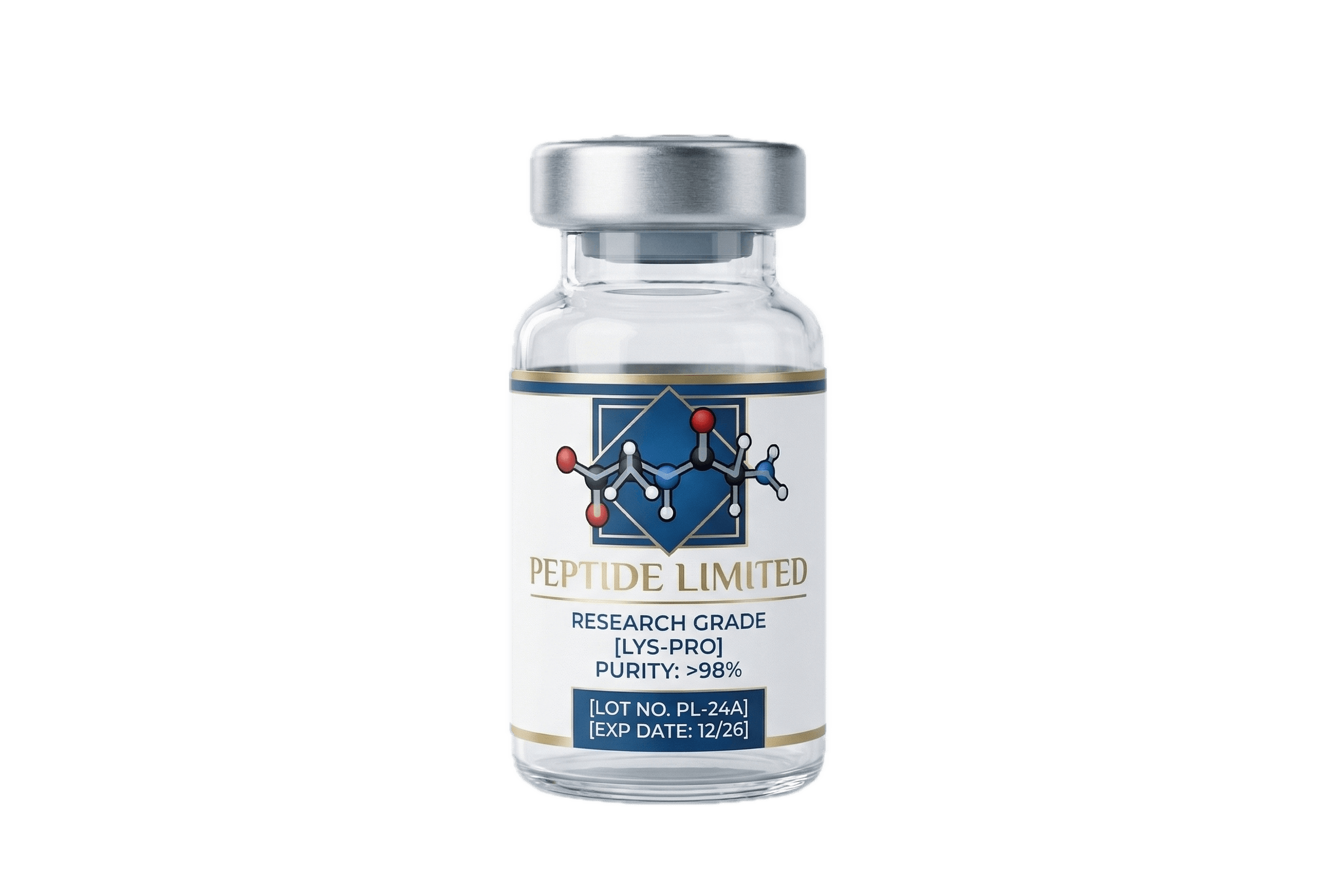
MOTS-c (10mg)
Specyfikacja techniczna
| Czystość (HPLC) | ≥98% (HPLC) |
| Numer CAS | 1627580-64-6 |
| Forma | White lyophilized powder |
| Przechowywanie | -20°C |
| Sekwencja | Met-Arg-Trp-Gln-Glu-Met-Gly-Tyr-Ile-Phe-Tyr-Pro-Arg-Lys-Leu-Arg |
| Masa cząsteczkowa | 2,174.62 g/mol |
| Forma soli | Acetate |
| Rozpuszczalność | Soluble in water |
MOTS-c (10mg)
Cena katalogowa w EUR · HU, SK, CZ, PL
- Eurozone (EUR)38,69 EUR
- Węgry (HU)38,69 EUR≈ 15 476 Ft
- Słowacja (SK)38,69 EUR
- Czechy (CZ)38,69 EUR≈ 967 Kč
- Polska (PL)38,69 EUR≈ 164,43 zł
Ta sama cena katalogowa w EUR przy dostawie na Węgry, Słowację, Czechy i Polskę. Płatność w EUR.
Orientacyjne kwoty HUF, CZK i PLN przeliczone z EUR; Słowacja stosuje EUR. Kursy przybliżone. Płatność w EUR.
MOTS-c — peptyd kodowany przez genom mitochondrialny; w badaniach metabolicznych i „mitokin" (wrażliwość na insulinę, adaptacja do wysiłku, AMPK). Wyłącznie RUO — do badań laboratoryjnych; nie do spożycia przez ludzi.
Wyłącznie do badań laboratoryjnych.
Nie do spożycia przez ludzi, zastosowań weterynaryjnych ani diagnostycznych.
From the Peptide Explorer
The first mitochondrial-derived peptide shown to have metabolic signaling functions. MOTS-c is encoded within the mitochondrial genome and acts as a retrograde signal from mitochondria to the nucleus, bridging mitochondrial function with metabolic regulation.
Key Mechanisms
- ›AMPK activation
- ›Folate-methionine cycle regulation
- ›De novo purine synthesis modulation
- ›Nuclear translocation under stress
- ›Mitochondrial-nuclear signaling
Primary Research Areas
- ›Metabolic regulation
- ›Exercise mimetics
- ›Insulin sensitivity
- ›Aging
- ›Mitochondrial biology
Key Research Findings
- Activated AMPK and improved insulin sensitivity in obese mice (Lee et al., 2015)
- Circulating levels decline with age and are restored by exercise
- Translocated to nucleus under metabolic stress to regulate gene expression
Research Overview
The first mitochondrial-derived peptide shown to have metabolic signaling functions. MOTS-c is encoded within the mitochondrial genome and acts as a retrograde signal from mitochondria to the nucleus, bridging mitochondrial function with metabolic regulation.
Origin: Encoded in mitochondrial 12S rRNA gene; discovered by Lee et al., 2015
Mechanism of Action
- AMPK activation
- Folate-methionine cycle regulation
- De novo purine synthesis modulation
- Nuclear translocation under stress
- Mitochondrial-nuclear signaling
Primary Research Areas
- Metabolic regulation
- Exercise mimetics
- Insulin sensitivity
- Aging
- Mitochondrial biology
Key Published Findings
- Activated AMPK and improved insulin sensitivity in obese mice (Lee et al., 2015)
- Circulating levels decline with age and are restored by exercise
- Translocated to nucleus under metabolic stress to regulate gene expression
Research Protocol
Commonly studied routes: Subcutaneous. Reconstitute with bacteriostatic water. Consult published literature for dose ranges; use our Peptide Calculator for volumetric preparation.
Storage
-20°C lyophilized
Important Notice
MOTS-c (10mg) is supplied for laboratory research use only (RUO). Not for human or veterinary use, diagnostics, or therapeutics.
Specyfikacja badawcza
Synthesized for strict analytical consistency. Verified via HPLC/MS.Zobacz standardy jakości →
Przechowywanie i obsługa
- Store lyophilized at -20°C
- Protect from light and moisture
- Use sterile bacteriostatic water for reconstitution
- Minimize freeze-thaw cycles
- Solubility: Soluble in water
Najczęstsze pytania
What is MOTS-c (10mg)?▼
Is MOTS-c (10mg) intended for human consumption?▼
How do you verify purity and identity?▼
How should MOTS-c (10mg) be stored?▼
Do you provide a Certificate of Analysis (COA)?▼
What purity is MOTS-c (10mg)?▼
Verified Research Reviews
User11
"MOTSC MOTSC MOSTC"
Loby
"crazy energetic boost!!!"