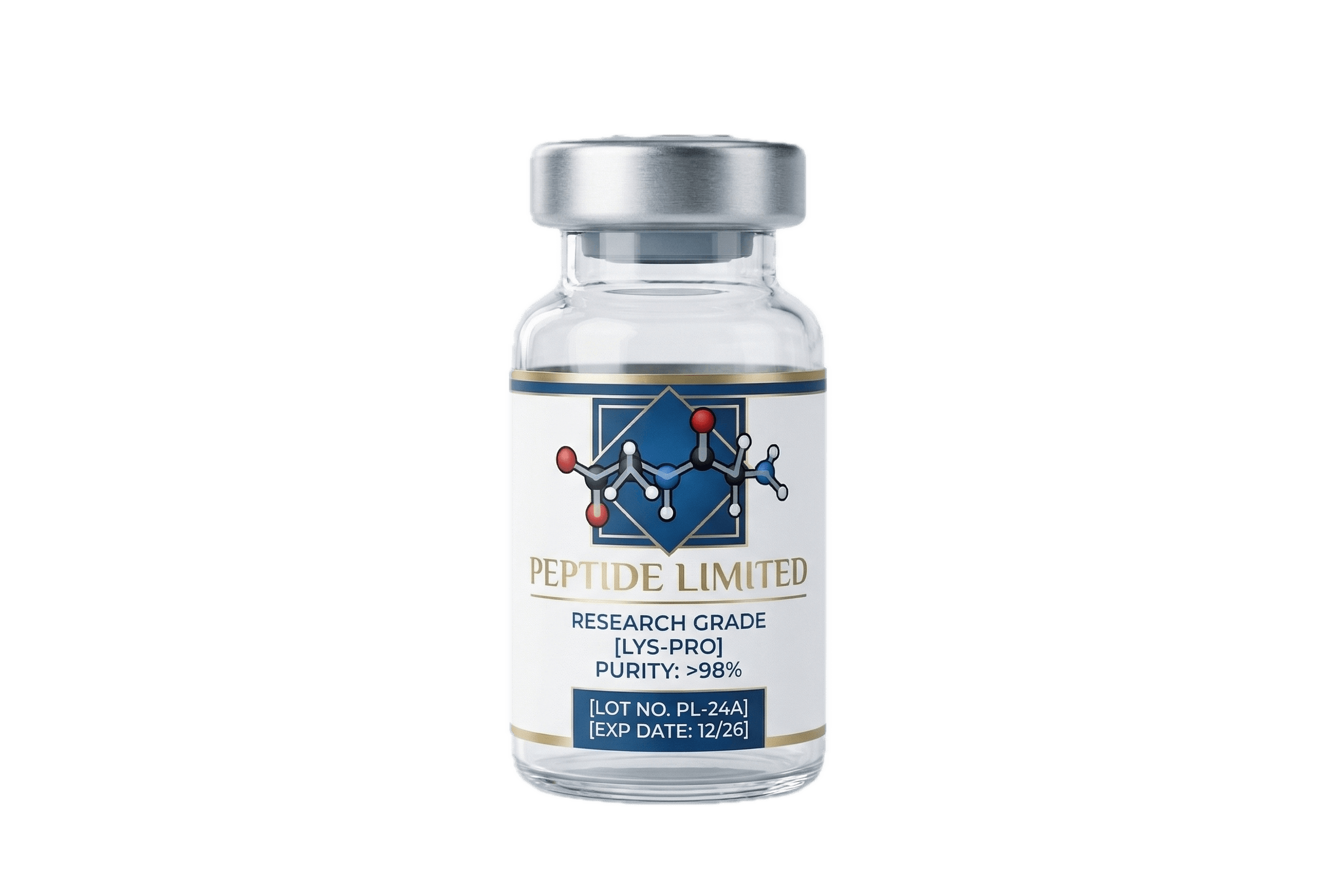
Cerebrolysin (60mg)
Technische Spezifikationen
| Reinheit (HPLC) | Pharmaceutical-grade standardized hydrolysate |
| CAS-Nummer | 12656-61-0 |
| Form | White lyophilized powder |
| Lagerung | -20°C |
| Sequenz | Mixture of low-molecular-weight neuropeptides and free amino acids (<10 kDa fraction) |
| Salzform | Acetate |
| Löslichkeit | Aqueous formulation, pH ~5.5-6.5 |
Cerebrolysin (60mg)
EUR-Listenpreis · HU, SK, CZ, PL
- Eurozone (EUR)40,50 EUR
- Ungarn (HU)40,50 EUR≈ 16 200 Ft
- Slowakei (SK)40,50 EUR
- Tschechien (CZ)40,50 EUR≈ 1 013 Kč
- Polen (PL)40,50 EUR≈ 172,13 zł
Gleicher EUR-Listenpreis für Lieferung nach Ungarn, Slowakei, Tschechien und Polen. Abrechnung in EUR.
HUF/CZK/PLN sind indikativ aus EUR umgerechnet; die Slowakei nutzt EUR. Kurse annähernd. Abrechnung in EUR.
Cerebrolysin — peptidbasierte Aminosäuremischung mit neurotrophen Eigenschaften (BDNF, NGF); in der Literatur in Modellen zu Schlaganfall, TBI und neurodegenerativen Erkrankungen. Nur RUO — ausschließlich für Laborforschung; nicht zum menschlichen Verzehr.
Ausschließlich für Laborforschung.
Nicht für den menschlichen Verzehr, tierärztliche oder diagnostische Zwecke.
From the Peptide Explorer
A parenteral neuropeptide preparation produced by controlled enzymatic breakdown of purified porcine brain proteins. Contains active low-molecular-weight neuropeptides and free amino acids that mimic the action of endogenous neurotrophic factors, with demonstrated neuroprotective and neurotrophic activity across stroke, TBI, and dementia models.
Key Mechanisms
- ›Neurotrophic factor-like activity (BDNF, GDNF, NGF mimetic)
- ›Reduction of excitotoxicity and free-radical damage
- ›Inhibition of calpain-mediated apoptosis
- ›Enhanced neurogenesis in dentate gyrus
- ›Modulation of microglial inflammation
Primary Research Areas
- ›Ischemic stroke recovery
- ›Traumatic brain injury
- ›Vascular dementia
- ›Alzheimer's disease research
- ›Neurodevelopmental models
Key Research Findings
- CASTA trial: significant functional improvement after acute ischemic stroke (Heiss et al., 2012)
- Dose-dependent cognitive improvement in mild-to-moderate Alzheimer's (Álvarez et al., Neurobiol Aging 2006)
- Reduced infarct volume and apoptosis in rodent MCAO models
Research Overview
A parenteral neuropeptide preparation produced by controlled enzymatic breakdown of purified porcine brain proteins. Contains active low-molecular-weight neuropeptides and free amino acids that mimic the action of endogenous neurotrophic factors, with demonstrated neuroprotective and neurotrophic activity across stroke, TBI, and dementia models.
Origin: Enzymatically standardized hydrolysate of purified porcine brain proteins; clinically used in Europe and Asia
Mechanism of Action
- Neurotrophic factor-like activity (BDNF, GDNF, NGF mimetic)
- Reduction of excitotoxicity and free-radical damage
- Inhibition of calpain-mediated apoptosis
- Enhanced neurogenesis in dentate gyrus
- Modulation of microglial inflammation
Primary Research Areas
- Ischemic stroke recovery
- Traumatic brain injury
- Vascular dementia
- Alzheimer's disease research
- Neurodevelopmental models
Key Published Findings
- CASTA trial: significant functional improvement after acute ischemic stroke (Heiss et al., 2012)
- Dose-dependent cognitive improvement in mild-to-moderate Alzheimer's (Álvarez et al., Neurobiol Aging 2006)
- Reduced infarct volume and apoptosis in rodent MCAO models
Research Protocol
Commonly studied routes: Intravenous, Subcutaneous. Reconstitute with bacteriostatic water. Consult published literature for dose ranges; use our Peptide Calculator for volumetric preparation.
Storage
Store below 25°C. Protect from light. Do not freeze
Important Notice
Cerebrolysin (60mg) is supplied for laboratory research use only (RUO). Not for human or veterinary use, diagnostics, or therapeutics.
Forschungsspezifikationen
Synthesized for strict analytical consistency. Verified via HPLC/MS.Qualitätsstandards ansehen →
Handhabung & Lagerung
- Store lyophilized at -20°C
- Protect from light and moisture
- Use sterile bacteriostatic water for reconstitution
- Minimize freeze-thaw cycles
- Solubility: Aqueous formulation, pH ~5.5-6.5