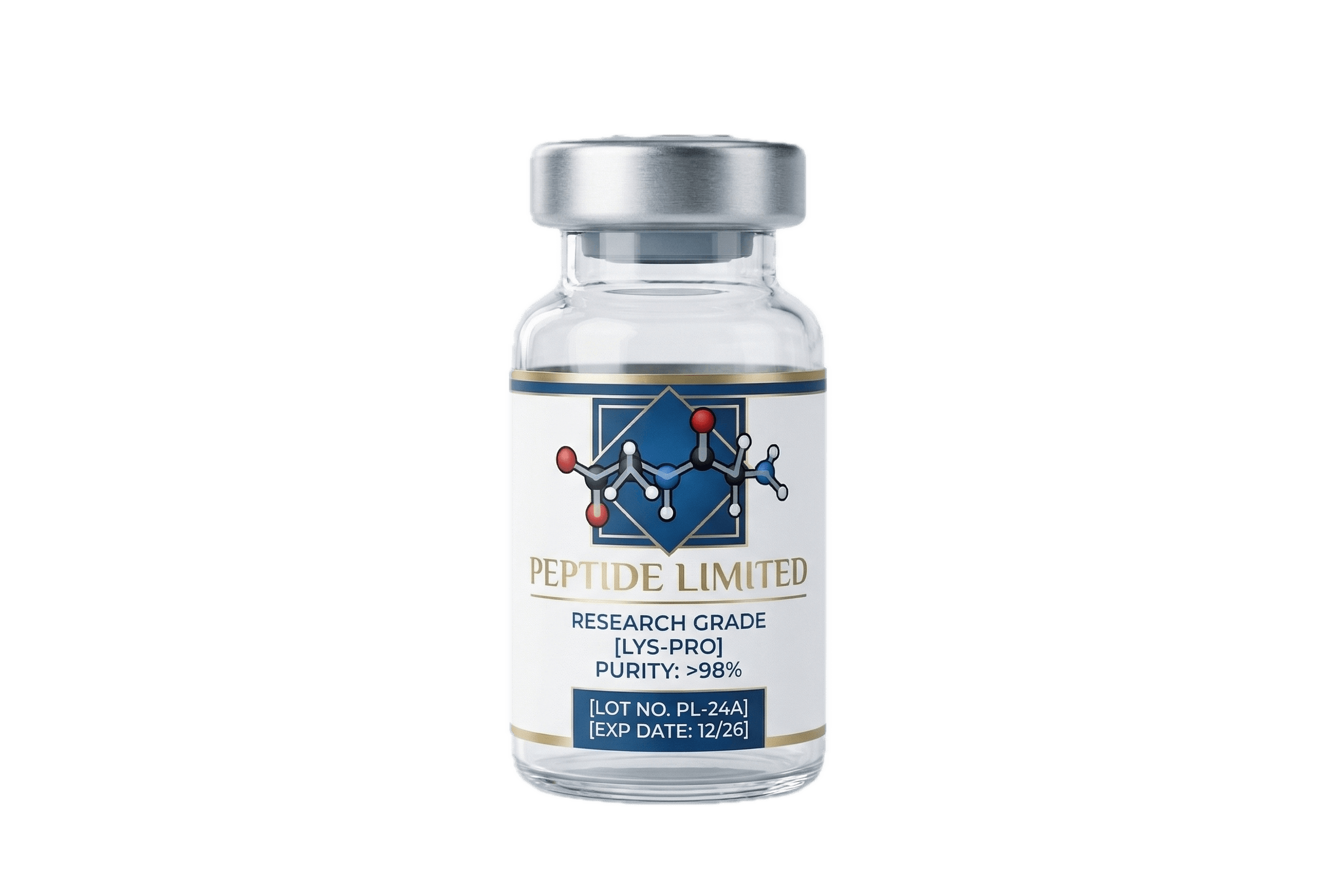
Glutathione (1500mg)
Technische Spezifikationen
| Reinheit (HPLC) | ≥98% (HPLC) |
| CAS-Nummer | 70-18-8 |
| Form | White lyophilized powder |
| Lagerung | -20°C |
| Sequenz | γGlu-Cys-Gly |
| Molekulargewicht | 307.32 g/mol |
| Salzform | Acetate |
| Löslichkeit | Highly water-soluble |
Glutathione (1500mg)
EUR-Listenpreis · HU, SK, CZ, PL
- Eurozone (EUR)148,50 EUR
- Ungarn (HU)148,50 EUR≈ 59 400 Ft
- Slowakei (SK)148,50 EUR
- Tschechien (CZ)148,50 EUR≈ 3 713 Kč
- Polen (PL)148,50 EUR≈ 631,13 zł
Gleicher EUR-Listenpreis für Lieferung nach Ungarn, Slowakei, Tschechien und Polen. Abrechnung in EUR.
HUF/CZK/PLN sind indikativ aus EUR umgerechnet; die Slowakei nutzt EUR. Kurse annähernd. Abrechnung in EUR.
Glutathion (reduziert) 1500 mg — wichtigstes tripeptidisches zelluläres Antioxidans; in Studien zu oxidativem Stress, Entgiftung und Immununterstützung. Nur RUO — ausschließlich für Laborforschung; nicht zum menschlichen Verzehr.
Ausschließlich für Laborforschung.
Nicht für den menschlichen Verzehr, tierärztliche oder diagnostische Zwecke.
From the Peptide Explorer
The most abundant intracellular thiol-based antioxidant, present at 1-10 mM in most mammalian cells. Its free sulfhydryl group on the central cysteine is directly oxidized to GSSG by reactive oxygen species and is regenerated by NADPH-dependent glutathione reductase. Central to Phase-II detoxification, redox signaling, and maintenance of protein thiol status.
Key Mechanisms
- ›Direct quenching of reactive oxygen and nitrogen species
- ›Cofactor for glutathione peroxidase and glutathione S-transferase
- ›Phase-II hepatic conjugation of xenobiotics
- ›Regeneration of vitamin C and vitamin E radicals
- ›Regulation of protein S-glutathionylation
Primary Research Areas
- ›Oxidative stress and ageing
- ›Hepatic detoxification research
- ›Neurodegenerative models (Parkinson's)
- ›Mitochondrial dysfunction
- ›Redox signaling
Key Research Findings
- Intracellular GSH depletion is a hallmark of dopaminergic neurodegeneration in Parkinson's (Sian et al., Ann Neurol 1994)
- Restores mitochondrial respiratory capacity in oxidative-stress models
- Central role in the γ-glutamyl cycle and Phase-II detoxification pathways
Research Overview
The most abundant intracellular thiol-based antioxidant, present at 1-10 mM in most mammalian cells. Its free sulfhydryl group on the central cysteine is directly oxidized to GSSG by reactive oxygen species and is regenerated by NADPH-dependent glutathione reductase. Central to Phase-II detoxification, redox signaling, and maintenance of protein thiol status.
Origin: Endogenous tripeptide antioxidant present in all aerobic cells; the principal intracellular redox buffer
Mechanism of Action
- Direct quenching of reactive oxygen and nitrogen species
- Cofactor for glutathione peroxidase and glutathione S-transferase
- Phase-II hepatic conjugation of xenobiotics
- Regeneration of vitamin C and vitamin E radicals
- Regulation of protein S-glutathionylation
Primary Research Areas
- Oxidative stress and ageing
- Hepatic detoxification research
- Neurodegenerative models (Parkinson's)
- Mitochondrial dysfunction
- Redox signaling
Key Published Findings
- Intracellular GSH depletion is a hallmark of dopaminergic neurodegeneration in Parkinson's (Sian et al., Ann Neurol 1994)
- Restores mitochondrial respiratory capacity in oxidative-stress models
- Central role in the γ-glutamyl cycle and Phase-II detoxification pathways
Research Protocol
Commonly studied routes: Intravenous, Subcutaneous, Oral. Reconstitute with bacteriostatic water. Consult published literature for dose ranges; use our Peptide Calculator for volumetric preparation.
Storage
-20°C lyophilized, protect from air and light
Important Notice
Glutathione (1500mg) is supplied for laboratory research use only (RUO). Not for human or veterinary use, diagnostics, or therapeutics.
Forschungsspezifikationen
Synthesized for strict analytical consistency. Verified via HPLC/MS.Qualitätsstandards ansehen →
Handhabung & Lagerung
- Store lyophilized at -20°C
- Protect from light and moisture
- Use sterile bacteriostatic water for reconstitution
- Minimize freeze-thaw cycles
- Solubility: Highly water-soluble